
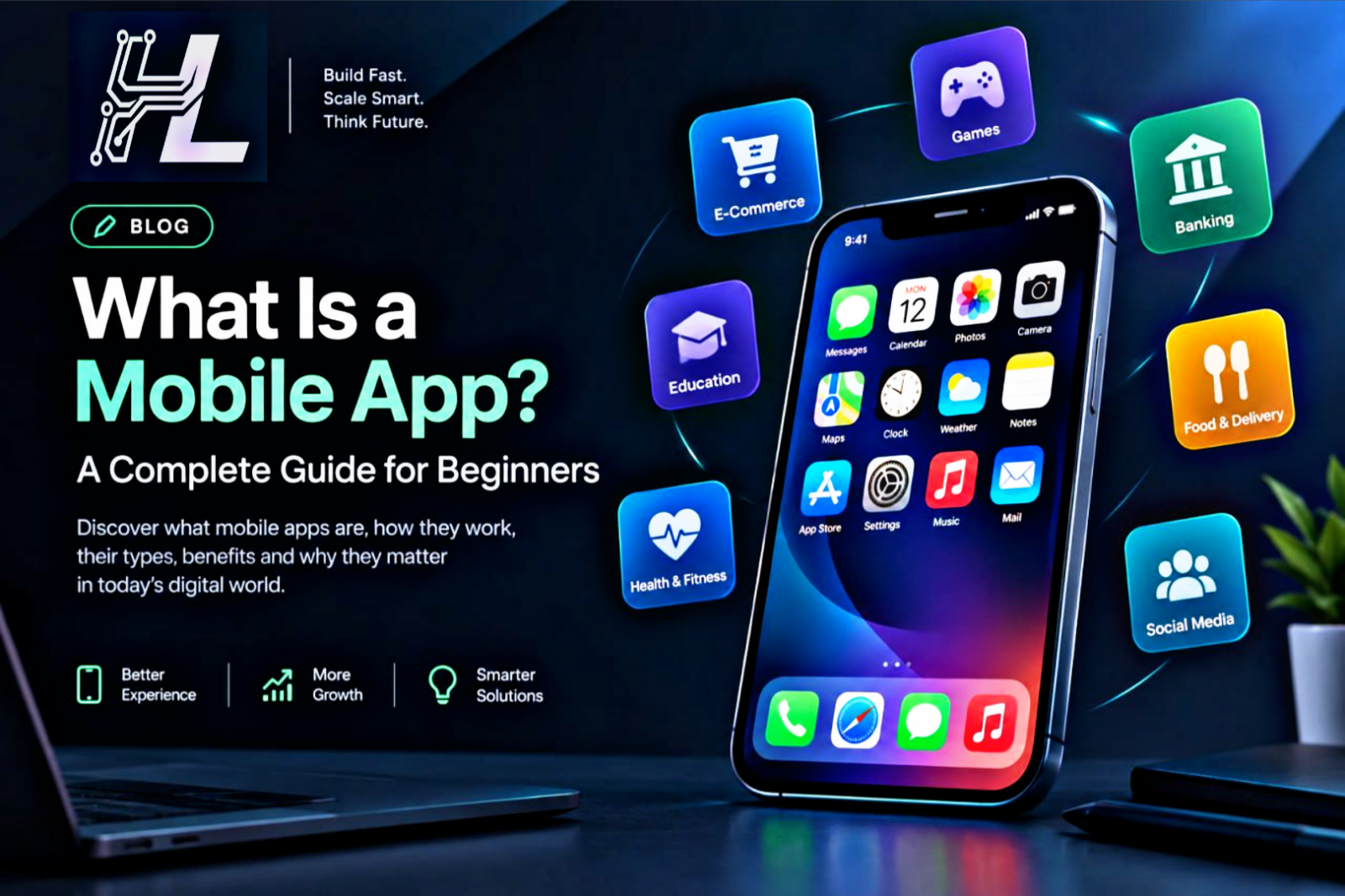
What Is a Mobile App? A Complete Guide for Beginners
Mobile apps have become an important part of everyday life. From communication and shopping to banking, education, entertainment, and business, mobile applications help people complete tasks quickly and conveniently using their smartphones.
But what exactly is a mobile app, and how does it work?
What Is a Mobile App?
A mobile app is a software application designed to run on a mobile device such as a smartphone or tablet. Apps are created to perform specific tasks or provide particular services.
For example, people use mobile apps to:
- Send messages and make calls
- Shop online
- Manage finances
- Order food
- Learn new skills
- Watch videos and listen to music
- Manage businesses
- Track health and fitness
- Book hotels and transportation
Mobile apps can be developed for different platforms, mainly Android and iOS.
How Do Mobile Apps Work?
A mobile app usually consists of several components working together.
The user interface (UI) is what users see and interact with. It includes buttons, menus, images, forms, and other visual elements.
The backend handles the application's data and business logic. It may communicate with a database, payment system, authentication service, or other external services.
For example, when you use an online shopping app:
- You open the app.
- You browse available products.
- You select a product.
- The app sends your request to the server.
- The server retrieves the relevant information from the database.
- The app displays the product details.
- You place an order and complete the payment.
All of these processes can happen within seconds.
Types of Mobile Apps
There are several types of mobile applications.
1. Business Apps
Business applications help companies manage their operations. They can include inventory management, sales management, employee management, customer management, accounting, and reporting.
2. E-Commerce Apps
E-commerce apps allow customers to browse products, place orders, make payments, and track deliveries directly from their phones.
3. Education Apps
Educational applications provide courses, lessons, quizzes, learning materials, and other educational resources.
4. Social Media Apps
Social media apps allow people to communicate, share content, create communities, and interact with others.
5. Entertainment Apps
These include applications for movies, music, games, video streaming, and other forms of entertainment.
6. Productivity Apps
Productivity apps help users organize their daily activities. Examples include task managers, note-taking apps, calendars, project management tools, and habit trackers.
Benefits of Mobile Apps for Businesses
A mobile app can provide significant benefits to a business.
Better Customer Experience
Customers can access your products or services directly from their smartphones without needing to visit a physical location or use a desktop computer.
Increased Accessibility
A mobile app can make your business available to customers wherever they are, provided they have an internet connection when one is required.
Direct Communication
Businesses can communicate with customers through notifications, messages, promotions, and important updates.
Improved Business Operations
Custom applications can automate repetitive processes and help businesses manage sales, inventory, employees, customers, and other operations more efficiently.
New Revenue Opportunities
Businesses can generate revenue through subscriptions, purchases, service fees, advertising, commissions, or premium features.
How Much Does It Cost to Build a Mobile App?
The cost of developing a mobile app depends on several factors.
These include:
- App complexity
- Number of features
- UI/UX design
- Android and iOS requirements
- Backend development
- Database requirements
- Payment integration
- Third-party integrations
- Security requirements
- Maintenance and updates
A simple application may require a relatively small development budget, while a large business platform with many users and advanced features can require significantly more investment.
Why Mobile App Development Matters
Smartphones are deeply integrated into modern life. As businesses and organizations become increasingly digital, mobile applications can provide a convenient way to connect users with products, services, information, and business operations.
For startups and established companies, a well-designed mobile app can become an important part of a broader digital strategy.
Final Thoughts
Mobile apps are more than icons on a smartphone. They are digital tools that connect users, businesses, services, and information.
Whether you are planning an e-commerce platform, business management system, educational application, social platform, or another digital product, choosing the right technology, design, features, security, and development strategy is essential.
A successful mobile app should not only look modern—it should be useful, reliable, secure, fast, and easy to use.